The Manhattan: A Rye Whiskey Masterclass with Sweet Vermouth Alchemy
The Manhattan represents the pinnacle of American cocktail craft—a spirit-forward union of rye whiskey, sweet vermouth, and aromatic bitters that has defined sophisticated drinking in the United States since the 1870s. Born at the Manhattan Club in New York (with a disputed origin story involving a banquet for presidential candidate Samuel Tilden), this drink transcends mere refreshment to become a study in flavor architecture. Where the Martini showcases botanical clarity, the Manhattan demonstrates how multiple complex flavor systems can integrate into a seamless, unified whole. The drink demands a specific type of whiskey—typically rye—that provides the necessary spice and structural backbone to stand up to the fortified wine's sweetness while accepting the bitter's botanical assault.
The chemistry of a Manhattan is fundamentally about ester interaction and phenolic balance. Rye whiskey contains approximately 40-50% ethanol by volume along with varying concentrations of congeners—the fermented byproducts including esters, higher alcohols, and phenolic compounds that define a spirit's flavor. When combined with sweet vermouth (which contains quinine, various botanical alkaloids, and residual sugar), the ethanol acts as an extraction medium, pulling fat-soluble flavor compounds from both ingredients into a homogeneous solution. The aromatic bitters—traditionally Angostura—introduce additional alkaloids (gentian, cinchona) that create a bitter receptor response, which paradoxically enhances the perception of sweetness through contrast effect.
The Science of the Manhattan
The optimal Manhattan follows a 2:1 ratio of whiskey to vermouth—a proportion that creates what sensory scientists term "flavor harmony through contrast." At this ratio, the whiskey's peppery rye character provides immediate warmth and spice, while the vermouth's sweetness emerges as a supporting note rather than a dominant element. The bitters (2-3 dashes) function as a "flavor bridge," connecting the whiskey's wood-derived vanillins with the vermouth's herbal compounds through shared aromatic pathways.
The dilution curve in a Manhattan follows a different trajectory than a Martini due to the presence of sugar in the vermouth. The sugar molecules increase the drink's viscosity, which actually slows initial dilution while allowing the water to penetrate more deeply over time. The target dilution of 10-15% water content achieves optimal mouthfeel—enough to soften the ethanol's harsh edges without diluting the structural integrity of the flavor profile. Over-dilution manifests immediately as a "thin" character where the whiskey's complexity collapses into the background.
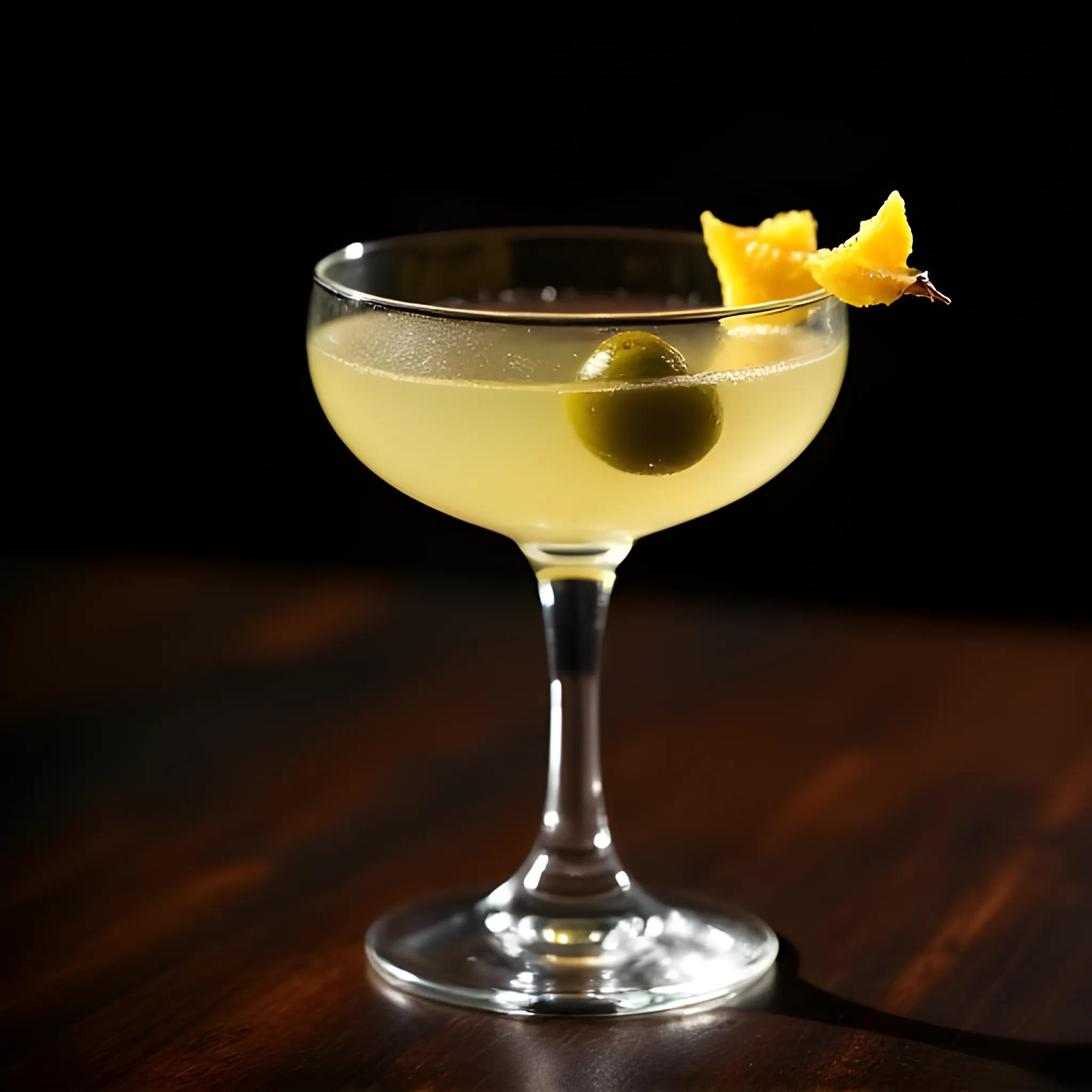
The wash line in a properly stirred Manhattan reveals technique quality. A correctly executed Manhattan shows a clean separation between the liquid and ice, with no clouding at the interface—this indicates proper stirring speed that avoids disrupting the mixture while achieving temperature equilibrium. The color should display the whiskey's amber depth, with a slight ruby tint from the vermouth, presenting an almost oily viscosity when the glass is swirled.
Ingredients
- 2 oz (60ml) Rye Whiskey (100-105 proof, aged 4+ years)
- 1 oz (30ml) Sweet Vermouth (Italian, preferably Carpano Antica or Dolin Rouge)
- 2-3 dashes Angostura Aromatic Bitters
- 1 Luxardo cherry (for garnish) OR Lemon twist (for garnish)
Instructions
-
Pre-chill all components: Place your coupe or Nick & Nora glass in the freezer for a minimum of 30 minutes. Chill a mixing glass with ice water.
-
Measure with precision: Using a jigger, measure 2 oz of rye whiskey and 1 oz of sweet vermouth into the chilled mixing glass. The 2:1 ratio is critical—deviation destroys the drink's structural balance.
-
Add bitters: Add 2-3 dashes of Angostura bitters directly into the mixing glass. The bitters provide the aromatic foundation that connects the whiskey and vermouth.
-
Add ice: Add 3-4 large, solid ice cubes to the mixing glass. The ice should be clear, not cloudy, indicating proper freezing without trapped air.
-
Stir with patience: Using a long-handled bar spoon, stir in a consistent circular motion for 30-40 seconds. The longer stirring time (compared to a Martini) is necessary due to the vermouth's viscosity—more time is required to achieve proper temperature equilibrium and dilution.
-
Strain with care: Using a Hawthorne strainer, double-strain through a fine-mesh strainer into the chilled glass. The double-strain prevents any vermouth sediment from entering the final product.
-
Garnish with intention: Drop a single Luxardo cherry into the center of the drink, or express a lemon twist over the surface and drop it in. The cherry adds a touch of sweetness and visual elegance.
Pro-Tips from The Drink Doctor
-
Rye selection: The spice-forward profile of rye whiskey (particularly from Indiana or Canada) is essential—Bourbon lacks the necessary peppery backbone to stand up to sweet vermouth. Look for ryes with 51%+ rye content in the mash bill.
-
Vermouth quality is paramount: The difference between premium and bottom-shelf vermouth is immediately perceptible. Carpano Antica provides vanilla and caramel notes; Dolin Rouge offers a drier, more herbal character. Never use sweet vermouth that has been open for more than 2 weeks.
-
The "reverse stir" technique: For maximum extraction, add the vermouth first, then the whiskey—the whiskey's higher ABV will actually pull additional flavor compounds from the vermouth as they combine.
-
Bitter balance: Start with 2 dashes and adjust to preference. More bitters create a more "aromatic" profile; fewer dashes emphasize the whiskey's character.
-
Temperature precision: A Manhattan should be served at approximately -3°C to -1°C. Any warmer and the ethanol's heat becomes dominant; any colder and the flavor compounds become muted.
Gear Recommendations
-
Koriko Weighted Tins: Use for the mixing process if not using a glass mixing vessel—provides optimal temperature control.
-
Mixing Glass: A standard 16-oz mixing glass with thick walls maintains temperature consistency throughout the longer stirring time.
-
Long Bar Spoon: The 12-inch length allows for comfortable stirring at the bottom of the mixing glass without频繁 repositioning.
-
Coupe Glass: The traditional Manhattan vessel—the shallow bowl allows the aromatic compounds to express more readily than a modern martini glass.
-
Japanese Jigger: Precision measurement is critical at the 2:1 ratio—Japanese-style jiggers provide the necessary accuracy.
-
Fine-Mesh Strainer: Essential for removing vermouth sediment that can create an unappealing appearance.
History & Variations
The Manhattan's origin at the Manhattan Club in the 1870s is well-documented, though the exact recipe and creator remain subjects of historical debate. The most accepted story places its creation at a banquet for presidential candidate Samuel Tilden, where a bartender named Black created a new drink using whiskey, vermouth, and bitters. The drink's immediate popularity spread throughout New York and eventually the world, becoming one of the first cocktails to achieve international recognition.
The evolution of the Manhattan mirrors the evolution of American drinking tastes. Early versions used whiskey (often what was available—rye, bourbon, or Canadian), but by the 1920s, Canadian whisky had become the dominant base due to prohibition-era availability. The modern classic emphasizes rye, reflecting both historical accuracy and contemporary taste preferences for bolder spirits.
Classic Variations
Perfect Manhattan: Equal parts sweet and dry vermouth—a more nuanced, less sweet expression that appeals to those who find the standard version too sugary.
Rob Roy: The Scotch whisky variation—same proportions but substituting blended Scotch for rye. Named after a Scottish folk hero.
Black Manhattan: Uses Amaro Averna instead of sweet vermouth for a more bitter, complex profile with Italiandigestif character.
Sazerac Variation: Add a few drops of Absinthe or Herbsaint as a rinse—this was actually the original method before bitters became standard.
Kentucky Manhattan: Substitute bourbon for rye—a sweeter, more approachable profile that highlights the whiskey's vanilla notes.
Long-Tail Keywords
- "classic Manhattan recipe perfect ratio"
- "Manhattan whiskey vermouth chemistry"
- "best rye whiskey for Manhattan"
- "how to stir a Manhattan properly"
- "sweet vermouth chemistry cocktail"
- "Angostura bitters flavor profile"
- "Manhattan vs cocktail history"