The Martini: A Masterclass in Gin-Vermouth Alchemy
The Martini stands as the undisputed patriarch of the cocktail canon—a precisely calibrated union of spirits that has defined sophisticated drinking for over a century. More than a simple combination of gin and vermouth, this drink represents the intersection of botanical chemistry, temperature physics, and historical evolution. From its alleged origins in the Martinez cocktail of 1880s California to its iconic status as the preferred libation of spies, presidents, and oligarchs, the Martini carries weight far beyond its modest 2-3 ounce volume. The drink's genius lies in its restraint: a spirit-forward composition where the botanical complexity of gin must remain perceptible beneath the aromatic embrace of dry vermouth—a delicate balance requiring precise technique and quality ingredients.
The chemical architecture of a Martini is a study in polarity. Gin, comprising predominantly ethanol (40-47% ABV) with dissolved botanical oils, is moderately polar. Dry vermouth, fortified with herbal infusions and utilizing a wine base, introduces additional polar compounds including absinthe-derived anethol and various botanical alkaloids. When stirred together, these compounds engage in a complex dissolution dance—the ethanol serving as a mutual solvent that creates a homogeneous mixture where neither component dominates. The resulting drink exists in a state of perfect chemical equilibrium, delivering the sharp clarity of spirit alongside the aromatic complexity of fortified wine.
The Science of the Martini
The dilution curve in a properly executed Martini follows a precise trajectory that defines its character. Initial stirring (first 15 seconds) achieves rapid temperature drop from 20°C to near 0°C, with immediate viscosity increase as the mixture thickens. Between 15-30 seconds, dilution stabilizes at approximately 15-20% water addition—a critical threshold where the drink achieves what mixologists term "mouthfeel equilibrium." Beyond 45 seconds, over-dilution occurs as excessive water breaks the emulsified bonds between spirit and vermouth aromatic compounds, resulting in a "washed" character devoid of definition.
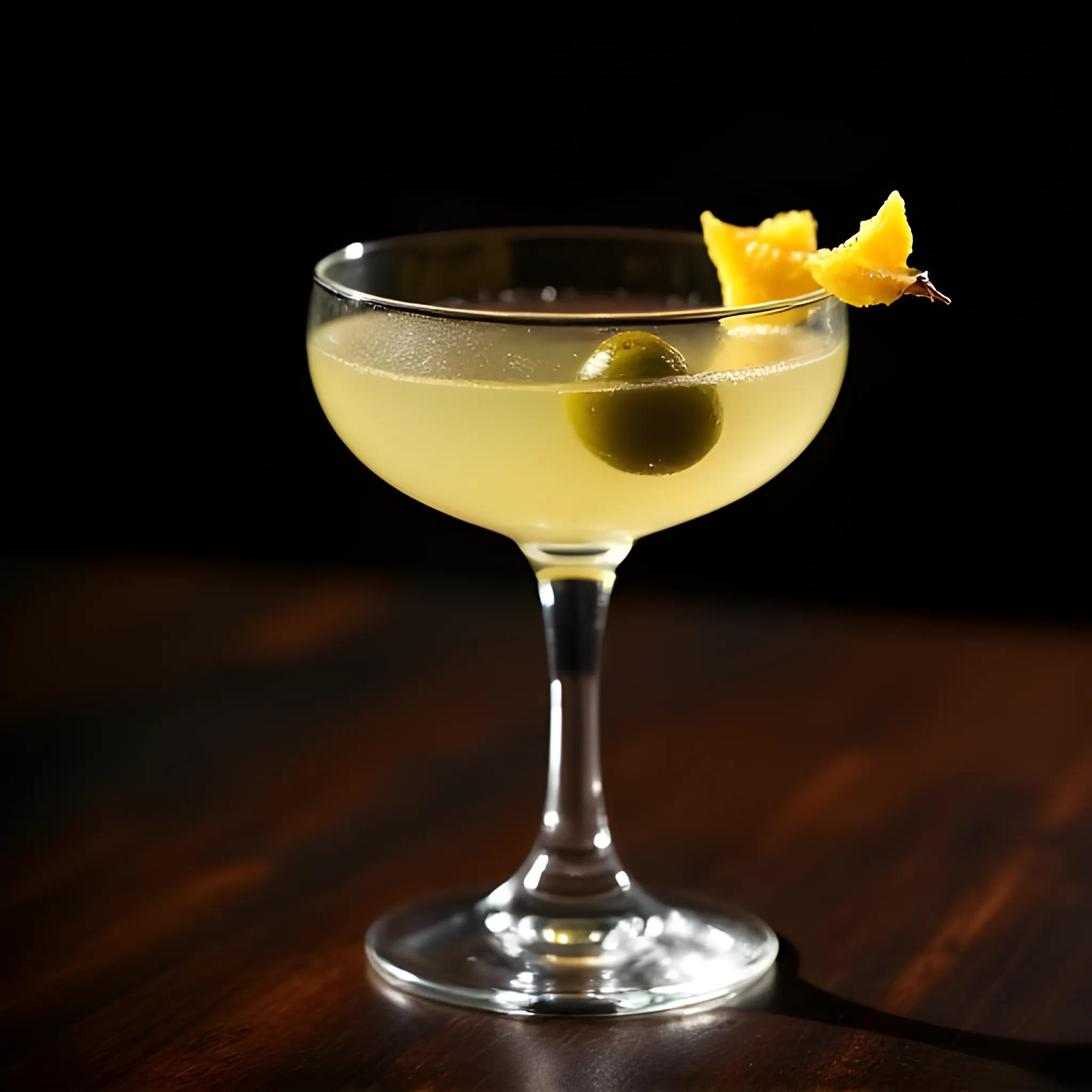
The meniscus of a properly chilled Martini presents a telling indicator of technique. A well-stirred Martini displays a slightly convex meniscus with visible clarity, indicating proper dilution without组分 separation. The wash line—the point where liquid meets ice—should appear crisp and well-defined, not cloudy, which would indicate agitation from improper shaking that introduces unwanted aeration and creates the dreaded "bruised" character. The garnish, whether expressed citrus oil or olive brine, interacts with the surface tension of the drink, creating a thin aromatic layer that releases volatile compounds with each sip.
Ingredients
- 2.5 oz (75ml) London Dry Gin (High-quality, 40-45% ABV)
- 0.5 oz (15ml) Dry Vermouth (French or Italian, preferably Lillet Blanc for a softer profile)
- 1 Lemon peel (for garnish) OR 2 Green olives (for garnish)
- Dash Orange bitters (optional, for depth)
Instructions
-
Pre-chill all components: Place your cocktail glass in the freezer for a minimum of 30 minutes. Chill your mixing glass with ice water while preparing ingredients.
-
Measure with precision: Using a jigger, measure 2.5 oz of gin and 0.5 oz of dry vermouth directly into a chilled mixing glass. The ratio of 5:1 (gin:vermouth) represents the classic dry Martini proportion.
-
Add ice with purpose: Add 3-4 large cubes of clear, solid ice to the mixing glass. Avoid crushed ice as it melts too rapidly and over-dilutes. The ice should fill approximately 60% of the glass volume.
-
Stir with technical rigor: Using a long-handled bar spoon, stir the mixture in a circular motion—12-15 rotations in 20-30 seconds. The objective is consistent temperature equalization without introducing aeration. The drink should reach approximately -2°C to 0°C.
-
Strain with intention: Using a Hawthorne strainer, double-strain through a fine-mesh strainer to remove ice shards and any vermouth sediment. Discard the ice and any residue.
-
Express and garnish: If using a lemon twist, hold the peel over the drink and express the oils by pressing firmly, then drop the peel into the glass. For olives, simply drop them into the drink using a cocktail pick.
Pro-Tips from The Drink Doctor
-
The rinse method: For an ultra-dry Martini, replace measured vermouth with a vermouth rinse—add 0.25 oz to the glass, swirl to coat, then discard before adding gin. This delivers aromatic presence without volumetric domination.
-
Temperature is everything: A properly chilled Martini glass should feel uncomfortably cold to the touch. Any residual warmth immediately compromises the drinking experience as the drink rapidly warms and the delicate balance shifts.
-
Vermouth freshness: Once opened, dry vermouth degrades within 2-3 weeks. Store opened vermouth in the refrigerator and consider purchasing smaller bottles to ensure you're using fresh product—the difference between fresh and oxidized vermouth is immediately perceptible.
-
The botanical match: Choose gin with complementary botanical profiles. A juniper-forward gin (Beefeater, Tanqueray) stands up to vermouth, while more subtle gins (Hendrick's, Aviation) allow vermouth to express more fully.
Gear Recommendations
-
Koriko Weighted Tins: The 18/8 stainless steel construction provides optimal temperature retention during stirring. The weighted base prevents slipping on polished bar surfaces.
-
Mixing Glass: Use a precision glass mixing vessel with a capacity of 16-20 oz. The thick-wall construction maintains consistent temperature throughout the stirring process.
-
Long Bar Spoon: A 12-inch stainless steel spoon with a twisted handle provides optimal leverage and control during the stirring motion.
-
Coupe Glass: The traditional vessel for a Martini—not V-shaped, as this is a later American invention. The coupe's shallow bowl allows the aromatic compounds to express more readily.
-
Jigger: A Japanese-style double-sided jigger (0.5 oz / 1.5 oz) ensures precise measurement.
History & Variations
The Martini's origin story remains contested among cocktail historians, with competing narratives placing its birth in San Francisco's Occidental Hotel (where the Martinez evolved into the Martini), New York's Knickerbocker Hotel (where it was first called a Martini), or various other establishments along the West Coast. What is certain is that by 1904, the drink had achieved widespread popularity, with the ratio of gin to vermouth steadily decreasing as tastes shifted toward drier expressions.
Classic Variations
Wet Martini: Increase vermouth to 1:1 ratio, creating a more aromatic, approachable profile.
Dirty Martini: Add 0.5-1 oz of olive brine, introducing salinity and umami complexity.
Perfect Martini: Equal parts dry and sweet vermouth—a nuanced profile bridging multiple palates.
Vesper: Created by Ian Fleming, 3 parts gin, 1 part vodka, 0.5 part Lillet Blanc—the literary Martini.
Robert Vari: Substitute dry vermouth with Dolin Blanc for a softer, more floral expression.
Long-Tail Keywords
- "how to make the perfect dry martini"
- "martini gin vermouth ratio guide"
- "stirred vs shaken martini science"
- "best gin for dry martini"
- "how to store vermouth properly"
- "martini glass temperature importance"
- "koriko tin review bar equipment"