The Whiskey Sour: Egg White Emulsification and the Physics of the Dry Shake
The Whiskey Sour stands as the definitive American sour cocktail—a perfect union of bold bourbon, bright citrus, and subtle sweetness that has graced bar menus since the mid-19th century. This drink represents the fundamental template from which all sour cocktails derive: a spirit base balanced by citrus and sweetened to create what the cocktail world terms "flavor harmony." The inclusion of egg white (in the "New York Sour" variation or as a standard component) elevates this from simple refreshment to technical achievement—the foam creates a textural experience that coats the palate and delivers the spirit's complexity in a way no other technique can match.
The chemistry of the Whiskey Sour revolves around acid-sugar balance and, when egg white is employed, the fascinating physics of emulsification. Fresh lemon juice contains approximately 4-6% citric acid, which provides the "sour" sensation through proton activation of taste receptors. The simple syrup (typically 1:1 sugar to water) provides approximately 50 Brix—sufficient sweetness to counter the acid without overwhelming the bourbon's character. At the classic 2:1:0.5 ratio (bourbon:citrus:syrup), the resulting mixture achieves what food scientists call "flavor equilibrium"—the point where neither sour nor sweet dominates, and both are enhanced by the spirit's warmth.
The Science of the Whiskey Sour
The egg white in a Whiskey Sour performs a critical function that most drinkers misunderstand. Egg white is approximately 90% water and 10% protein (primarily albumen), with no fat content. When vigorously shaken, these proteins denature—unfolding their molecular structure to expose hydrophobic regions that then bond with the spirit's oils and citrus compounds. This creates a stable colloidal suspension where fat-soluble flavor compounds are evenly distributed throughout the liquid rather than floating on the surface. The result is a "mouth-coating" texture that delivers flavor more uniformly than any non-foam cocktail can achieve.
The dry shake technique (shaking without ice first) is essential for proper foam formation. Without ice, the shaker's vibration energy goes entirely into protein denaturation rather than temperature reduction. This first shake should last 15-20 seconds and produces a frothy, voluminous foam. The second shake (with ice) chills the mixture while maintaining the foam structure—the ice actually helps "set" the foam by rapidly reducing temperature, which stabilizes the protein structure. The resulting foam should hold for 2-3 minutes, slowly collapsing as the protein structure degrades.
The dilution curve in a Whiskey Sour is uniquely affected by the egg white. Initially, dilution is slower due to the protein matrix retarding water penetration. However, as the drink sits, the foam begins to release trapped liquid back into the cocktail, creating a self-diluting effect that continues throughout consumption. This is why a Whiskey Sour should be consumed relatively quickly—the optimal texture exists in the first 3-4 minutes, after which the foam degrades and the drink loses its characteristic character.
Ingredients
- 2 oz (60ml) Bourbon Whiskey (100 proof preferred, aged 4+ years)
- 0.75 oz (22ml) Fresh Lemon Juice (approximately 1/2 lemon)
- 0.5 oz (15ml) Simple Syrup (1:1 ratio)
- 1 Egg white (1 oz / 30ml, approximately 1 large egg)
- 2-3 dashes Angostura Aromatic Bitters (for float)
- 1 Orange peel (for garnish) OR Lemon wheel (for garnish)
Instructions
-
Separate the egg: Carefully separate the yolk from the white—any yolk contamination will prevent proper foam formation. A small amount of yolk dramatically reduces foam stability.
-
Dry shake: Add the bourbon, lemon juice, simple syrup, and egg white to a Koriko tin. Secure the tin and shake vigorously for 15-20 seconds without ice. The mixture should become frothy and increase in volume by approximately 30%.
-
Add ice: Add 6-8 large ice cubes to the tin. The ice should fill approximately 80% of the capacity.
-
Wet shake: Shake again for 15-20 seconds to chill the mixture while maintaining the foam. The shaker should feel extremely cold to the touch.
-
Double-strain: Using a Hawthorne strainer, double-strain through a fine-mesh strainer into a coupe or old-fashioned glass. The double-strain removes any egg particles that might pass through the first strainer.
-
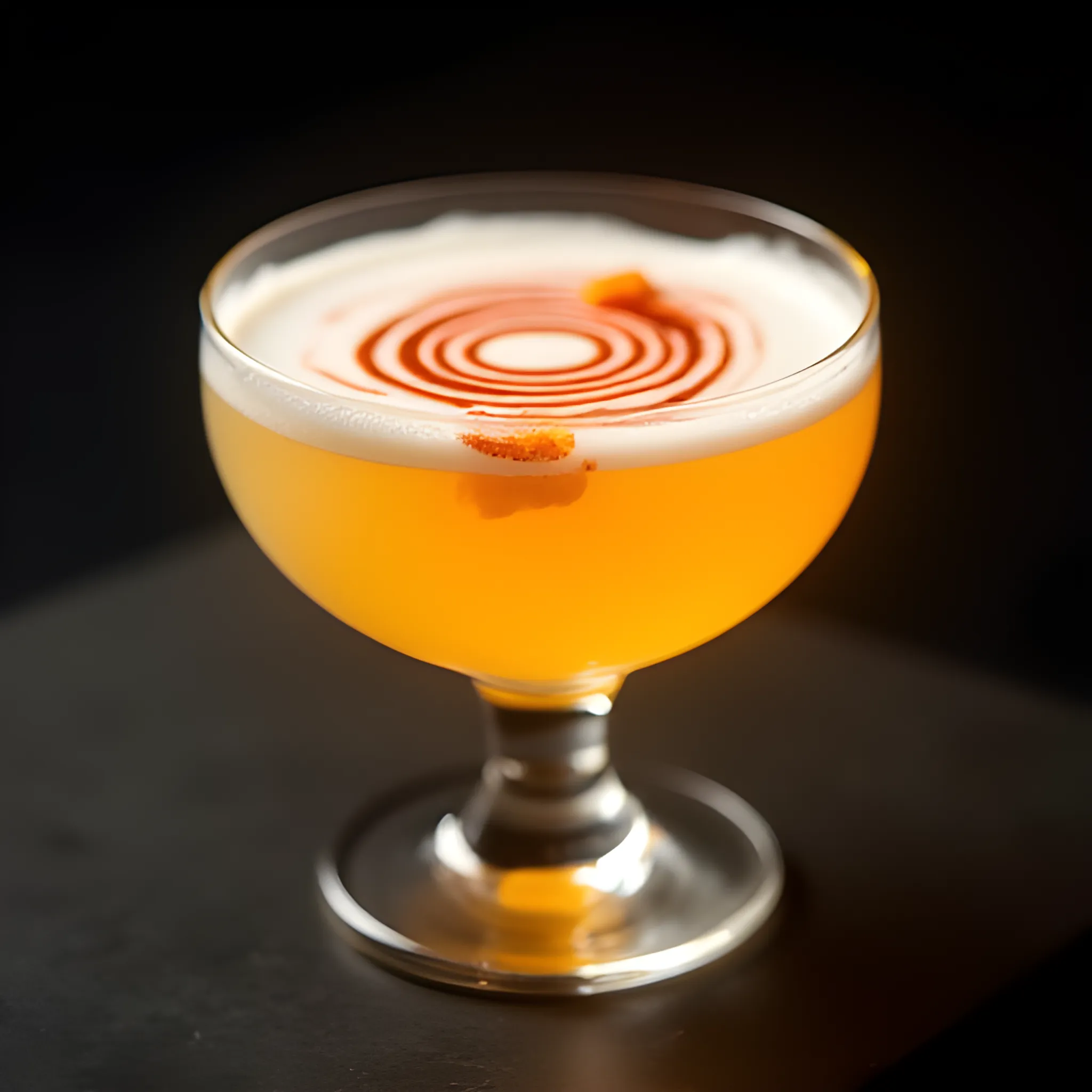
Create the bitters float: Carefully pour 2-3 dashes of Angostura bitters onto the surface of the foam. Do not stir—allow the bitters to form a decorative pattern on top.
-
Garnish: Express the orange peel over the drink's surface, then drop it in. The oils will create a shiny layer on the foam while the peel adds aromatic complexity.
Pro-Tips from The Drink Doctor
-
Egg safety: Use the freshest eggs possible. Older eggs have weaker whites that produce less stable foam. If concerned about salmonella, use pasteurized egg whites—available at most grocery stores and always safe.
-
The "egg crack": Always add the egg white last when measuring, as volume varies by egg size. One large egg white equals approximately 1 oz or 30ml—measure precisely for consistent results.
-
Bourbon selection: Higher proof bourbon (100+ proof) performs better in sour cocktails—the additional proof provides more flavor intensity that survives the dilution and acid interaction. Avoid低于80 proof expressions.
-
Citrus freshness: Fresh lemon juice is non-negotiable. Bottle juice tastes flat and "cooked" due to the pasteurization process. Roll the lemon on the counter before juicing to maximize extraction.
-
The foam timer: A properly made Whiskey Sour foam should hold for 3-4 minutes. If it collapses immediately, the egg was either old, contaminated with yolk, or the shake wasn't vigorous enough.
-
Angostura as aesthetic: The bitters float is primarily visual—the foam prevents the bitters from integrating, creating a striking contrast. When you break through the foam to drink, the bitters provide a final aromatic flourish.
Gear Recommendations
-
Koriko Weighted Tins: The weight provides the momentum necessary for proper foam formation. The 18/8 stainless steel maintains temperature throughout both shake phases.
-
Hawthorne Strainer: Essential for the double-straining step—removes egg particles and any ice chips that might mar the presentation.
-
Fine-Mesh Strainer: The second strainer—essential for removing the finest particles that the Hawthorne might miss.
-
Coupe Glass: The traditional vessel for a Whiskey Sour—the shallow bowl showcases the foam while the narrow opening helps retain the aromatic compounds.
-
Japanese Jigger: Precise measurement of the critical ratios (2:0.75:0.5) requires accurate measurement tools.
History & Variations
The Whiskey Sour's history traces back to the 1870s, with the earliest documented recipe appearing in an 1887 Wisconsin newspaper. The drink's creation likely stems from sailors' need for citrus to prevent scurvy—the "sour" naming convention derives from the sour (citrus) component rather than any inherent tartness of the whiskey. As bourbon became America's dominant spirit, it naturally replaced rum in the sour formula, creating the modern classic.
The addition of egg white—the "Boston Sour"—emerged in the early 20th century as bartenders sought ways to create more sophisticated textural experiences. The technique was considered a mark of technical proficiency, with bartenders taking pride in achieving a stable, long-lasting foam. This innovation directly influenced the development of other foam cocktails, including the Clover Club, Pisco Sour, and Ramos Fizz.
Classic Variations
New York Sour: The classic variation—adds a red wine float on top of the foam. The wine provides additional complexity and creates a striking visual presentation.
Boston Sour: The egg white version—the original "sour with foam" that popularized the technique.
Sour Mash: Not a variation but a clarification—some interpretations use "sour mash" (using some of the previous batch's mash as a starter) to add depth, though this is more a bourbon production term.
American Whiskey Sour: Uses American whiskey (often defined as either bourbon or rye) with the same base formula.
Rye Sour: Substitutes rye whiskey for bourbon—a spicier, more aggressive profile that appeals to those who prefer bolder spirits.
Lemon vs. Lime: Some traditions use lime juice instead of lemon—lime provides slightly more tropical character but less "bright" acidity.
Long-Tail Keywords
- "classic whiskey sour recipe"
- "egg white emulsification cocktail"
- "dry shake technique foam"
- "best bourbon for whiskey sour"
- "whiskey sour vs new york sour"
- "angostura bitters float technique"
- "sour cocktail science chemistry"